
As reported by BehindEvidence.com, the Artemis II launch 2026 is a turning point in modern space exploration. Artemis II launch 2026 marks NASA’s historic return to deep space, as four astronauts prepare to travel toward the Moon after more than five decades. On April 1, 2026, the mission will test humanity’s ability to safely leave Earth orbit once again. The clock is running. On April 1, 2026, four astronauts will sit inside a spacecraft atop the most powerful rocket America has ever built — and head toward the Moon for the first time since Richard Nixon was president.
The Artemis II launch 2026 represents a critical step in NASA’s long-term lunar exploration program. Artemis II is not a landing mission. It is something arguably more important — a proof of concept that modern humanity can still leave this planet, venture into deep space, and come home safely. After decades of false starts and near misses, NASA stands six days away from the most significant human spaceflight event in over half a century.
Artemis II Launch 2026: Mission Explained
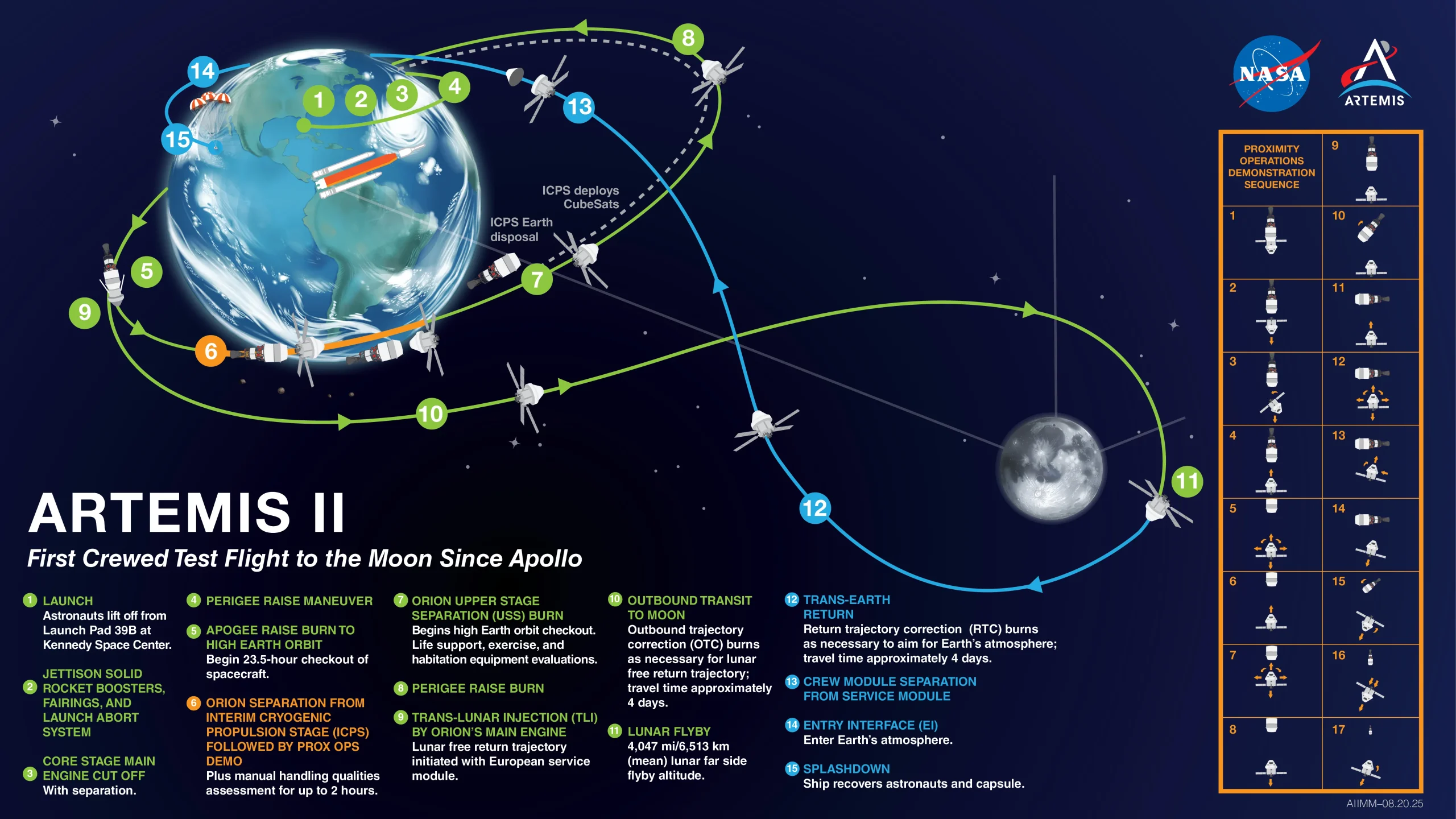
During the Artemis II launch 2026 mission, astronauts will travel beyond low Earth orbit. Artemis II follows a straightforward but breathtaking flight plan. The Space Launch System rocket will lift the Orion spacecraft off Launch Pad 39B at Kennedy Space Center in Florida, push it beyond Earth orbit, and send it curving around the far side of the Moon.
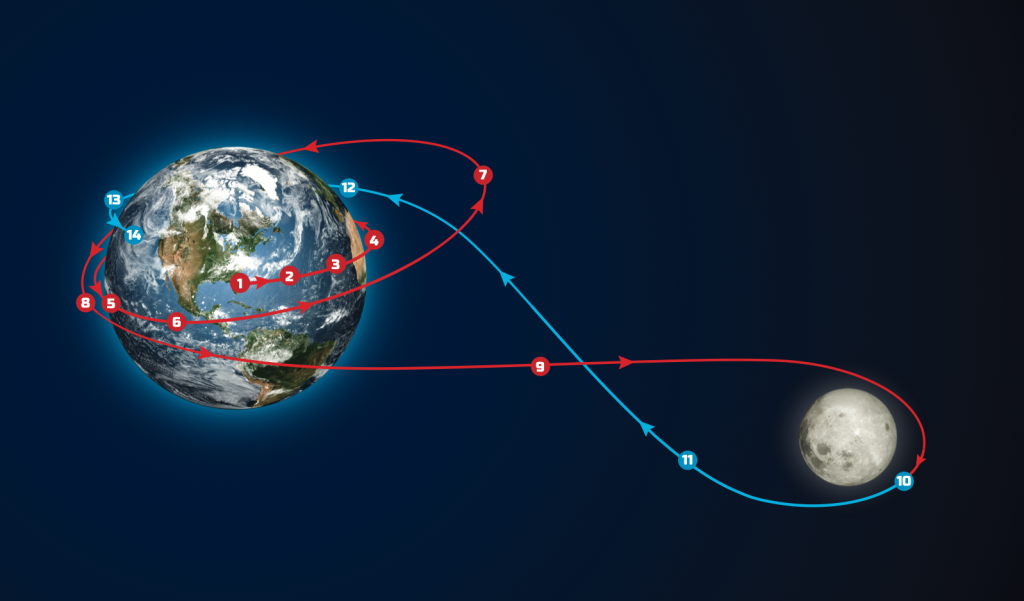
The crew will not land. Instead, they will use the Moon’s gravitational field like a slingshot — allowing the natural physics of space to pull Orion around the lunar body and redirect it back toward Earth. Scientists call this a free-return trajectory. In practice, it means the Moon itself does the heavy lifting on the return leg.
The entire journey runs approximately ten days, ending with a fiery plunge through Earth’s atmosphere before splashdown off the coast of San Diego, California.
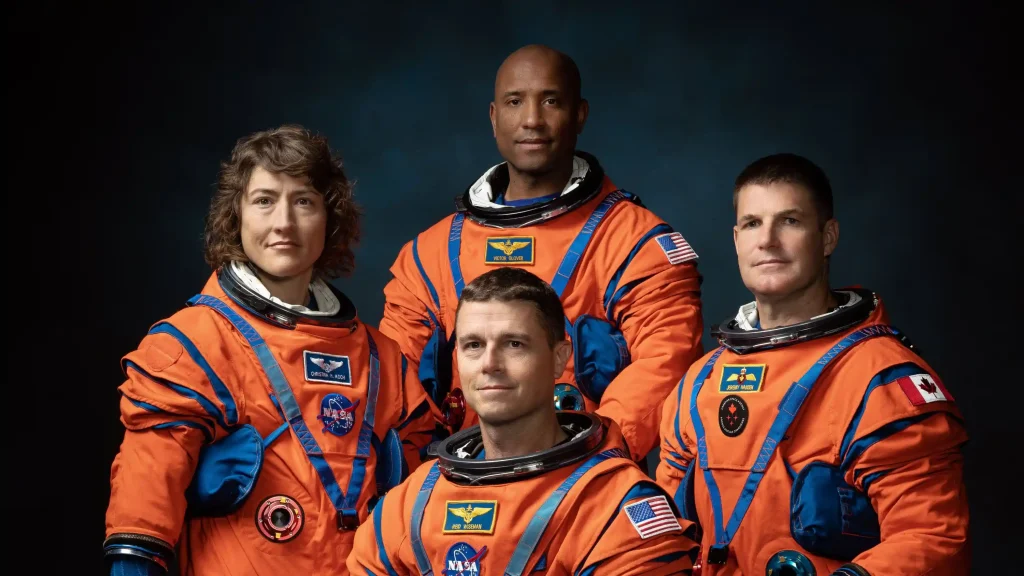
Four Astronauts. Four Historic Firsts.
NASA chose its Artemis II crew with purpose — not just competence.
Reid Wiseman — Commander
Wiseman takes the left seat as mission commander. A former US Navy test pilot who previously lived and worked aboard the International Space Station, he carries both the technical authority and the calm temperament this mission demands. Leading the first crewed deep-space voyage in a generation requires someone who treats pressure as routine — Wiseman does exactly that.
Victor Glover — Pilot
Glover sits to the right of Wiseman as pilot, and his place in history is already assured. When Orion crosses beyond low Earth orbit on launch day, Glover will become the first person of colour to travel that far from our planet. That milestone belongs not just to him — it belongs to every person who was told that space was not a place for people like them.
Christina Koch — Mission Specialist
Koch already holds the record for the longest single spaceflight by a woman, having spent 328 days aboard the ISS. On Artemis II, she steps into an even larger chapter — becoming the first woman to travel into deep space and toward the Moon. Her presence aboard Orion rewrites what exploration looks like for an entirely new generation of young scientists and engineers.
Jeremy Hansen — Mission Specialist
Hansen represents the Canadian Space Agency and carries the weight of international partnership into deep space. Once Orion leaves Earth’s orbit, he will become the first person from outside the United States to venture beyond low Earth orbit in the history of human spaceflight. His selection reflects a space programme that genuinely belongs to more than one nation.
The Road to the Launchpad Was Anything But Smooth
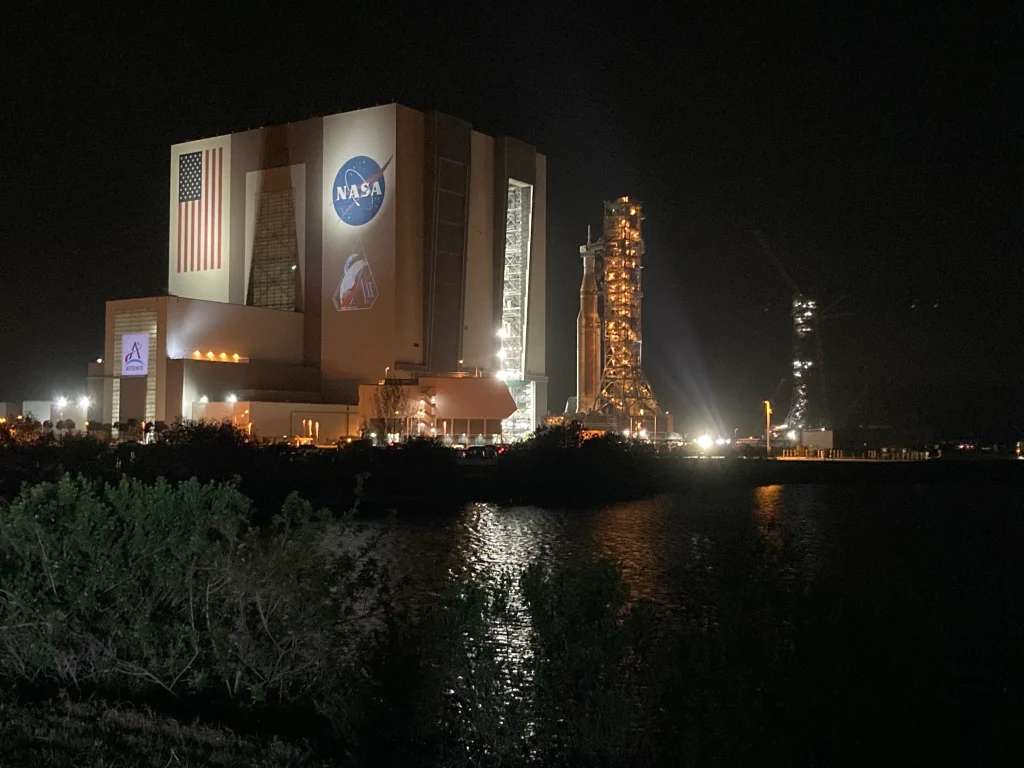
The Artemis II launch 2026 will test Orion spacecraft systems in deep space conditions. Engineers ran a fuelling rehearsal in late February that went well — right up until ground teams spotted an unexpected helium flow problem inside the rocket’s upper stage after the test concluded. A faulty seal inside a cable connecting the rocket to the launchpad’s ground systems had caused the issue, and NASA made the call to roll the entire stack back inside the massive Vehicle Assembly Building for repairs.
That decision pushed the launch from March into April. Some critics questioned the delay. NASA held firm — and fixed the problem correctly.
Technicians replaced the compromised seal, completed all required checks, and rolled the rocket back to the pad on the night of March 19. The eleven-hour crawl from the VAB to Pad 39B — moving at under one mile per hour — attracted thousands of spectators who watched under Florida stars as the 322-foot stack crept toward the launch complex.
The crew, meanwhile, entered quarantine on March 18 in Houston before flying to Kennedy Space Center to complete isolation ahead of launch day.
One Major Design Change — And a Smart Reason Behind It | Artemis II Launch 2026 Update
The original Artemis II flight plan called for a skip reentry — a technique where the Orion capsule grazes the top of Earth’s atmosphere, bounces back out briefly like a stone skipping water, then descends for splashdown. The method allows for greater precision in landing location and reduces overall heat load.
After Artemis I returned from its uncrewed lunar test flight in 2022, engineers examining the heat shield noticed unexpected material loss — fragments of the shield’s protective ablative coating had broken away during reentry. The damage did not endanger the uncrewed mission, but flying humans through the same conditions demanded a different answer.
NASA scrapped the skip reentry entirely. Orion will now follow a steeper, more direct descent path into the atmosphere — a less elegant approach, but one that keeps the heat shield conditions more predictable and the risk profile lower. Safety over style, always.
What the Crew Will Experience
The Artemis II astronauts will not spend their ten days simply watching the Moon grow larger through Orion’s windows — though that alone would be extraordinary.
The mission carries a formal science agenda. Organ-on-a-chip research devices will monitor how deep-space radiation and microgravity affect human tissue at the cellular level, generating data that will directly inform how NASA protects crews on longer future missions.
The crew will also run emergency protocol tests, evaluate life-support performance, and assess Orion’s communication systems while operating at distances no human-carrying spacecraft has ever reached. At its farthest point — roughly 5,000 miles beyond the Moon — Artemis II will shatter the record for the most distant human spaceflight in history, a record the Apollo 13 crew has held since 1970.
After Artemis II Launch 2026: Future Moon Missions
The mission itself lands in San Diego Bay. Its consequences land in history.
Artemis III, currently scheduled for mid-2027, will send a crew into Earth orbit to dock with and test the commercial lunar landers developed by SpaceX and Blue Origin — the vehicles that will eventually carry humans down to the lunar surface.
Artemis IV, targeting early 2028, holds the prize: the first crewed Moon landing since Eugene Cernan walked on the lunar surface in December 1972. That mission will place the first woman and the first person of colour on the Moon itself.
Beyond that, NASA’s roadmap points toward yearly lunar landings and the gradual construction of a permanent human presence on the Moon — a foundation from which missions to Mars become not just imaginable, but logistically achievable.
Six Days, Six Chances
NASA’s launch window opens on April 1 at 6:24 PM Eastern Time and stays open through April 6. A secondary window opens later in the month on April 30.
Lori Glaze, who oversees NASA’s exploration systems directorate, told reporters after the agency’s flight readiness review that every team involved in Artemis II had cleared the mission for launch with no outstanding major concerns.The success of Artemis II launch 2026 will determine the future of human missions to the Moon and Mars.
“All the teams polled go,” she said — three words that carry the weight of thousands of engineers, decades of work, and the dreams of everyone who ever looked at the Moon and wondered whether humanity would ever go back.
The answer, as of April 1, 2026, is yes. For more space and science updates, visit BehindEvidence.com
Quick Mission Facts — Artemis II
| Detail | Information |
|---|---|
| Launch Date | No Earlier Than April 1, 2026 |
| Launch Time | 6:24 PM ET (primary attempt) |
| Launch Window | April 1–6, secondary April 30 |
| Launch Vehicle | Space Launch System (SLS) |
| Spacecraft | Orion |
| Launch Site | Kennedy Space Center, Pad 39B, Florida |
| Mission Duration | ~10 Days |
| Commander | Reid Wiseman (NASA) |
| Pilot | Victor Glover (NASA) |
| Mission Specialists | Christina Koch (NASA), Jeremy Hansen (CSA) |
| Trajectory | Free-return lunar flyby |
| Max Distance from Earth | ~5,000 miles beyond the Moon |
| Reentry Speed | ~25,000 mph |
| Splashdown Location | Pacific Ocean, off San Diego |
| Recovery Vessel | US Navy San Antonio-class ship |
Sources & External Links
| # | Source | Link |
|---|---|---|
| 1 | NASA — Official Artemis II Mission Page | nasa.gov |
| 2 | NASA — Crew Quarantine & Rollout Finalised | nasa.gov |
| 3 | NPR — NASA Sets April 1 Launch Date | npr.org |
| 4 | CNN — Flight Readiness Review Details | cnn.com |
| 5 | Houston Public Media — Mission Explainer | houstonpublicmedia.org |
| 6 | Britannica — Artemis II Full Overview | britannica.com |
| 7 | Kennedy Space Center — Launch Viewing | kennedyspacecenter.com |
| 8 | Wikipedia — Artemis II | en.wikipedia.org |
📌 This article reflects confirmed information as of March 25, 2026. Launch timing remains subject to weather conditions and final technical clearances. Follow NASA’s live channels for real-time countdown updates.
Also read : https://behindevidence.com/gold-price-today-march-23-2026-mcx-gold-rate-silver-price-crash/