

Published: April 8, 2026 | Category: Science & Technology, Energy | Reading Time: ~9 minutes
India nuclear reactor news is making headlines after India’s breeder reactor project achieved its first criticality at Kalpakkam on April 6, 2026.
On the evening of April 6, 2026, at exactly 8:25 PM IST, something remarkable happened inside a reactor building at Kalpakkam, Tamil Nadu. A chain reaction — controlled, self-sustaining, and decades in the making — ignited for the first time inside India’s 500 MWe Prototype Fast Breeder Reactor (PFBR). With that single moment of “first criticality,” India formally entered the second stage of a nuclear vision conceived over 70 years ago, and joined an exclusive global club that currently has only one other member: Russia.
This isn’t just a science story. It is a story about energy security, self-reliance, and a country of 1.4 billion people preparing its power supply for the next century. This India nuclear reactor news marks a major milestone in the country’s energy strategy. This India nuclear reactor news highlights a major shift in India’s long-term energy strategy.
India Nuclear Reactor News: What Is First Criticality?
Before understanding why this milestone is historic, it helps to understand what “criticality” actually means.
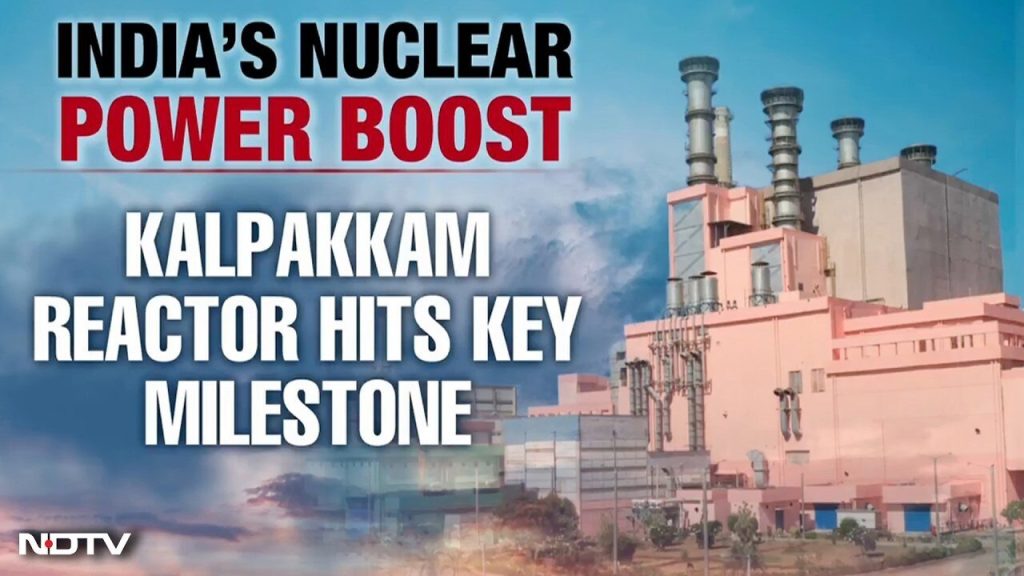
In nuclear science, criticality is the precise point at which a reactor sustains a controlled chain reaction on its own — neutrons from one fission event triggering exactly enough new fissions to keep the process going without outside input. It does not mean the reactor is producing electricity yet. Think of it as a car engine turning over for the first time: it’s running, but you haven’t yet driven anywhere. The India nuclear reactor project is designed to maximise fuel efficiency through a three-stage system.
The milestone represents a key operational phase preceding calibrated power escalation and eventual commercial electricity generation. The Defense News Commercial operations at the PFBR are scheduled to begin by September 2026, after a series of physics experiments and progressive power ramp-up tests.
What makes this moment historic is not just the physics — it’s what it unlocks for India strategically.
India’s Three-Stage Nuclear Programme: The 70-Year Vision Behind This Moment
The India nuclear reactor project is based on a three-stage nuclear programme. To appreciate why April 6, 2026 matters so much, you need to go back to 1954.
That year, physicist Dr. Homi Jehangir Bhabha presented a plan to solve one of India’s most fundamental energy problems: the country held only about 1–2% of the world’s uranium reserves, yet had enormous energy needs to meet. His solution was a brilliantly staged programme designed to work around the uranium shortage by progressively multiplying fuel and ultimately tapping into a resource India has in abundance — thorium.
India has only around 1–2% of the global uranium reserves, but one of the largest shares of global thorium reserves at about 25% of the world’s known thorium reserves. Wikipedia Bhabha’s three-stage plan was designed to bridge that gap over generations.
Here is how the three stages work:
Stage 1 — Pressurised Heavy Water Reactors (PHWRs): India burns natural uranium in PHWRs to generate electricity. As a byproduct, these reactors produce plutonium in spent fuel. This stage is already mature — India has been operating PHWRs for decades, and nuclear capacity currently stands at 8.78 GW.
Stage 2 — Fast Breeder Reactors (the PFBR): The plutonium harvested from Stage 1 becomes the primary fuel for fast breeder reactors. These reactors not only generate electricity but also produce more fissile material than they consume — a feat no conventional reactor can match. The PFBR at Kalpakkam is India’s entry point into this stage. Stage II creates the fuel required to unlock India’s thorium reserves. Without fast breeder reactors producing this fissile material, the thorium-based Stage III cannot be implemented at scale. OpIndia
Stage 3 — Thorium-Based Reactors: Using the uranium-233 bred from thorium-232 in Stage 2, India eventually deploys thorium-fuelled reactors at massive scale. The Indian nuclear establishment estimates that the country could produce 500 GWe for at least four centuries using just the country’s economically extractable thorium reserves. Wikipedia
The PFBR is the bridge between Stage 1 and Stage 3 — a role no other technology can currently play.
India Breeder Reactor: How the PFBR Works ?
The Prototype Fast Breeder Reactor is fundamentally different from the nuclear plants most people are familiar with. India breeder reactor technology plays a key role in this nuclear reactor project.
Conventional thermal reactors slow down — “moderate” — neutrons using water or heavy water so they can more efficiently cause fission in uranium-235. The PFBR does the opposite. It uses fast, unmoderated neutrons, which is why it belongs to the family of reactors called “fast reactors.”
The reactor runs on Uranium-Plutonium Mixed Oxide (MOX) fuel — a blend of plutonium oxide and uranium oxide, derived from reprocessing the spent fuel of Stage 1 PHWRs. Surrounding the fuel core is a blanket of Uranium-238. When fast neutrons strike this blanket, they convert the uranium-238 into fissile plutonium-239. More plutonium is generated during operation than was originally loaded as fuel. This is what earns it the name “breeder.”
This “closed fuel cycle” ensures that nuclear waste is recycled back into the system, drastically increasing fuel efficiency. Owing to this self-replenishing feature, the PFBR is often described as an “Akshay Patra” of energy. Wionews
The PFBR’s coolant is liquid sodium — not water. Sodium doesn’t slow down neutrons, making it ideal for a fast reactor. It also transfers heat exceptionally well, enabling higher thermal efficiency. The reactor is a pool-type design with 1,750 tonnes of sodium as coolant, designed to generate 500 MWe of electrical power with an operational life of 40 years. Wikipedia. India breeder reactor technology allows the country to generate more fuel than it consumes.
However, sodium brings its own engineering demands: it reacts violently with water and burns on contact with air, requiring elaborate isolation systems and safety protocols — challenges the PFBR’s design team has spent decades solving indigenously.
India’s Place in the World: Second Only to Russia
The achievement at Kalpakkam places India in very select company globally.
Once fully operational, India will become only the second country after Russia to have a commercial fast breeder reactor. News on Air Russia currently operates two fast breeder reactors — the BN-600 (600 MW) and the BN-800 (800 MW). Countries like France, Japan, and the United States attempted to develop commercial-scale fast breeders and did not succeed. Japan’s Monju reactor was a cautionary tale, eventually decommissioned after a sodium leak in 1995. This India nuclear reactor news places India among the world’s leading nuclear nations.
Countries like France and the US were unable to scale up their breeder reactors. Deccan Chronicle India, despite significant delays, has now done what those nations could not.
The project was built with contributions from over 200 Indian industries, including several MSMEs — a genuine Atmanirbhar Bharat achievement in advanced nuclear engineering.
The Technology Behind the PFBR: Built Entirely in India
One of the most significant aspects of this milestone is that it was achieved without importing the core technology. This India nuclear reactor development strengthens long-term energy security. This India nuclear reactor news places India among the world’s leading nuclear nations.
The reactor’s design was developed entirely by the Indira Gandhi Centre for Atomic Research (IGCAR), a research institution under the Department of Atomic Energy, based in Kalpakkam itself. Construction and commissioning were handled by Bharatiya Nabhikiya Vidyut Nigam Limited (BHAVINI), a public sector enterprise under DAE.
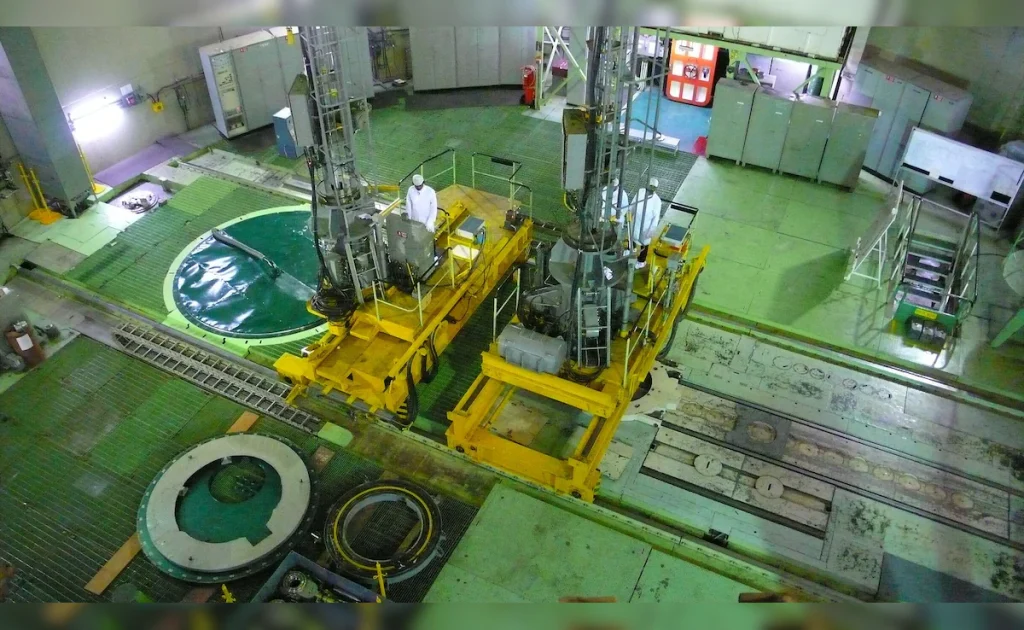
The reactor incorporates advanced safety systems, high-temperature liquid sodium coolant technology, and a closed fuel cycle approach that enables recycling of nuclear materials, thereby improving sustainability and reducing waste. Department of Atomic Energy
The project also involved solving genuinely novel engineering problems. As Atomic Energy Minister Jitendra Singh acknowledged in Parliament, delays in the programme were primarily due to first-of-a-kind technological challenges encountered during the integrated commissioning phase — problems that no previous project in India had faced, and for which there was no imported blueprint.
That these challenges were solved domestically strengthens India’s position not just as a nuclear energy user, but as a nuclear technology developer. This India nuclear reactor news places India among the world’s leading nuclear nations.
What Comes Next: The Road to Grid Power and Beyond
First criticality is a milestone, not the finish line.
The immediate next steps involve a series of low-power physics experiments to validate reactor behaviour, followed by a progressive power escalation process. Each stage requires clearance from the Atomic Energy Regulatory Board (AERB), which has maintained rigorous oversight throughout the project.
A dedicated Fast Reactor Fuel Cycle Facility (FRFCF) is under construction at the Kalpakkam site to support reprocessing and refuelling operations associated with the PFBR and future fast breeder reactors. The Defense News
Once grid-connected and commercially operational, the PFBR will generate 500 MW of clean, low-carbon baseload electricity. More importantly, it will begin breeding plutonium at scale — building up the fissile material stockpile needed to fuel the next generation of fast breeders.
Following the PFBR, plans are in place to construct six additional fast breeder reactors with capacities of 600 MWe each. Two of these units are planned at a site adjacent to the PFBR, while a separate location is to be identified for the remaining four reactors. The Defense News
India’s current nuclear capacity stands at 8.78 GW — just over 3% of the national electricity mix. The government’s target is an ambitious 100 GW by 2047 as part of the Viksit Bharat vision. The PFBR alone will not close that gap, but it opens the technological corridor through which future capacity must pass.
India Nuclear Reactor Project: Why It Matters for Energy
India has committed to reaching net zero emissions by 2070 and has been rapidly expanding its renewable energy capacity. Wind and solar are growing fast — but they are intermittent. Nuclear energy provides something renewables currently cannot: reliable, around-the-clock, low-carbon baseload power.
Fast breeder reactors take this further. They generate electricity with high thermal efficiency, produce no carbon emissions, and their closed fuel cycle dramatically reduces the volume and longevity of nuclear waste compared to conventional reactors.
The attainment of criticality at the PFBR marks a significant technological and strategic shift in India’s nuclear journey. It signals progress from a resource-constrained uranium base towards a thorium-driven future, reinforcing energy security and technological self-reliance. DT Next
For a country that imports significant quantities of fossil fuels — oil, gas, and coal — and has limited domestic uranium, the prospect of a self-sustaining nuclear fuel cycle powered by domestic thorium represents a genuine long-term energy independence strategy. Anil Kakodkar, former Secretary of the DAE, said the development was very important from the point of view of India’s energy security, especially at a time when geopolitical crises in West Asia have impacted the supply of oil and natural gas. Deccan Chronicle. Overall, this India nuclear reactor news shows India’s growing nuclear capabilities.
Key Facts: India’s PFBR at a Glance
| Parameter | Detail |
|---|---|
| Location | Kalpakkam, Tamil Nadu |
| Capacity | 500 MWe |
| First Criticality | April 6, 2026, 8:25 PM IST |
| Fuel | Uranium-Plutonium MOX |
| Coolant | Liquid Sodium |
| Designer | IGCAR (Indira Gandhi Centre for Atomic Research) |
| Builder | BHAVINI (Bharatiya Nabhikiya Vidyut Nigam Ltd.) |
| Commercial Operations | Targeted September 2026 |
| Project Cost | ₹8,181 crore |
| Operational Life | 40 years |
Frequently Asked Questions
What does “first criticality” mean for the PFBR? First criticality means the reactor has successfully initiated a self-sustaining, controlled nuclear fission chain reaction for the first time. It is a crucial safety-verified milestone confirming the reactor core is functioning as designed. The reactor is not yet generating commercial electricity at this stage.
Why is India’s PFBR called a “breeder” reactor? Because it produces more fissile fuel (plutonium-239) than it consumes during operation. By surrounding the fuel core with a blanket of uranium-238, fast neutrons convert the fertile uranium into new plutonium — effectively multiplying India’s available nuclear fuel.
Is India the first country to build a fast breeder reactor? No. Russia has been operating commercial-scale fast breeder reactors since the 1970s and 1980s. However, India is the second country to develop and commission a fast breeder reactor with commercial-scale potential, and the first to do so entirely with indigenous technology.
How does the PFBR connect to India’s thorium reserves? In its current configuration, the PFBR breeds plutonium-239 from uranium-238. In a future configuration, thorium-232 will be introduced into the blanket, where it will be converted into uranium-233 — the fuel intended for Stage 3 of India’s nuclear programme, which will tap India’s vast thorium deposits at scale.
When will the PFBR start producing electricity? Commercial power generation is targeted for September 2026, following a series of physics tests, power escalation trials, and regulatory clearances from the AERB.
Conclusion
On the night of April 6, 2026, a 70-year-old vision took a decisive step towards becoming reality. The first criticality of India’s Prototype Fast Breeder Reactor at Kalpakkam is not merely a technical achievement — it is the activation of a long-term energy strategy built to last centuries.
By building this reactor entirely with indigenous technology, India has demonstrated that it belongs among the world’s leading nuclear engineering nations. By entering Stage 2 of Homi Bhabha’s three-stage programme, it has unlocked the path to Stage 3 — and with it, the promise of clean, self-sustaining energy from its own abundant thorium reserves.
The reactor still needs to ramp up to full power, connect to the grid, and prove its performance over time. The road ahead is long. But the chain reaction has started — and this time, it won’t stop. Overall, this India nuclear reactor news confirms India’s strong push toward energy independence.
Sources: Department of Atomic Energy (DAE), Press Information Bureau, BHAVINI, IGCAR, Times of India, The Print, Deccan Chronicle, Wikipedia (Prototype Fast Breeder Reactor), India’s Three-Stage Nuclear Power Programme