
It was supposed to be a moment of celebration. Pakistan’s ambassador arrived. Prayers were said. Photographs were taken.
Three months later, the building those photographs were taken in front of faces a demolition order from Japanese authorities.
The Kawagoe mosque controversy has turned into one of Pakistan’s most embarrassing diplomatic incidents in Japan in recent memory — exposing a chain of events that began with ignored stop-work orders, continued with a high-profile inauguration, and ended with the ambassador’s own embassy publicly urging Pakistani nationals to obey Japanese law.
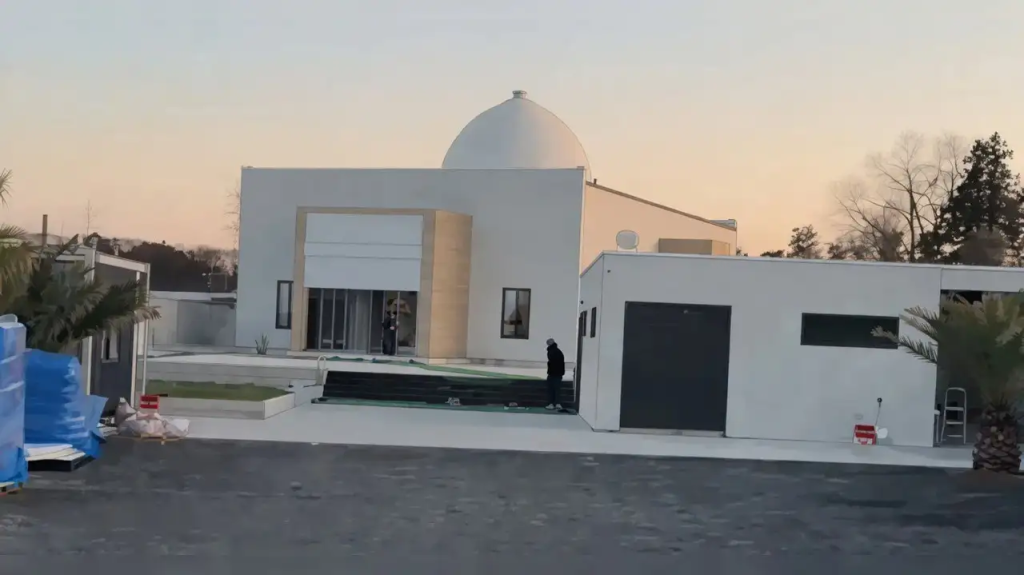
What Was Built — and Where
The structure, named Japan Jama Masjid Ramzan, stands in the Shimo-Akasaka district of Kawagoe city, Saitama Prefecture. It was built on land classified as an Urbanisation Control Area under Japan’s City Planning Act — a designation that tightly controls building activity and generally prohibits new construction unless specific permissions are obtained. IIFL Finance
No application was ever filed. No approval was ever sought before construction began. IIFL Finance
The land itself has its own paper trail. Records show the 4,500-square-metre property, designated as mountain forest land, changed ownership in March 2025 — transferred from a real-estate company based in Fujimi to a firm registered at the Kawagoe address. News24
Construction proceeded despite the area’s protected status. Local residents noticed. Authorities intervened. And then — rather than stop — the builders kept going.
The Stop-Work Orders Nobody Followed
This was not a situation where authorities were unaware. They tried to act early.
As far back as October 2024, local residents organised protests against the nearly completed structure. Kawagoe city officials issued multiple stop-work orders in response. LatestLY
The workers reportedly claimed they could not understand Japanese — apparently to justify their refusal to comply with official instructions. Construction continued regardless. LatestLY
By April 2026, the mosque stood complete. An inauguration ceremony was planned. Invitations went out. One reached Pakistan’s ambassador.
The Ambassador Who Attended — And the Assurance He Was Given
Pakistan’s Ambassador to Japan, Abdul Hameed, attended the mosque’s opening ceremony on April 3, 2026. The inauguration drew attention not just for its religious significance but for the presence of the country’s top diplomatic representative. BankBazaar
That presence would later become the centrepiece of an uncomfortable public explanation.
When the illegality of the construction came to light, Pakistan’s embassy issued a clarification stating that Ambassador Abdul Hameed had accepted the invitation only after organisers assured him that all necessary approvals had been secured. “The Embassy of Pakistan has no connection to any such projects, especially those that do not comply with the laws of local governments. This includes the event held in Kawagoe on April 3, 2026, for which the Ambassador of Pakistan accepted the invitation on the basis of information that all required permits in accordance with Japanese law had been obtained,” the embassy said. News24
In other words — the ambassador was told everything was legal. It was not.
Japan Issues the Demolition Order
Japanese authorities did not move slowly once the full picture emerged.
Kawagoe city officials confirmed that the mosque was constructed without the necessary applications and permits required under local planning laws. City officials instructed the owners to remove the structure entirely. BankBazaar
The municipal government confirmed no application was ever filed and no approval ever sought before construction began — a straightforward breach of the City Planning Act. IIFL Finance
The current owners responded by arguing that the structure was already standing when they acquired the land in March 2025 — an argument that does not resolve the legal status of the unauthorised construction under Japanese law. BankBazaar
The demolition order stands.
Pakistan’s Embassy Issues Emergency Public Statement
The fallout forced Pakistan’s diplomatic mission in Tokyo into an unusual position — publicly reprimanding its own community through an official government statement.
On May 31, 2026, the Pakistan Embassy in Japan issued a statement urging Pakistani Muslims in Japan to comply with Japanese laws in all matters, particularly regarding mosque construction: “The Embassy of Pakistan in Japan strongly urges all Pakistanis residing in Japan to comply with Japanese laws in all matters, including the construction of mosques. Any construction must be undertaken only after obtaining the necessary permits from local authorities.” LatestLY
A second statement posted on X went further, calling for transparency with local residents and authorities: “Information regarding the legal aspects of all such projects should be communicated to all members of the community and to the residents of that area as well. The Embassy of Pakistan urgently requests all relevant members of the community to fully cooperate with Japanese authorities and to comply with Japanese laws in all circumstances, particularly in connection with projects of this nature.” News24
A national embassy publicly instructing its citizens to follow the basic laws of the country they live in — that is a rare and telling moment.
Criticism From Within Pakistan’s Own Community
The embarrassment was not limited to government circles. Pakistan’s established Muslim community in Japan broke ranks publicly.
Yashio Masjid, one of Japan’s most respected mosques and a long-established institution in the Pakistani Muslim community, has operated from a converted factory since 2000 and was formally registered as a religious corporation in 2007. It built its standing through neighbourhood consultations, community outreach, and participation in local clean-up drives. News24
Shakeel Sheikh Mohammad, a 62-year-old Pakistani who represents Yashio Masjid, did not hold back his criticism of the Kawagoe project. “If they are building a mosque without getting permission, that is not a good thing,” he said. “The environment for a mosque can only be established by getting along well with the local people.” News24
That statement came from a man who has spent years building exactly the kind of community trust the Kawagoe builders bypassed entirely.
The Broader Debate This Case Has Ignited
The controversy surrounding the Kawagoe mosque has triggered a broader debate within Japanese society about immigration, demographic change, cultural integration, and the obligations of newcomers toward their host communities. OneIndia
Japan’s planning regulations exist for clear reasons — protecting the character of land designations, managing urban development, and giving local communities a voice in how their neighbourhoods change. Urbanisation Control Areas like the one in Kawagoe carry particular weight because they protect forest and agricultural land from uncontrolled development.
The Kawagoe case is not the first time Japan has seen tensions around mosque construction. But the combination of factors here — ignored official stop-work orders, continued construction after protests, a high-profile inauguration attended by a foreign ambassador, followed by a demolition order — created a sequence that drew sustained national attention.
The progression carries a clear lesson: immigration and multiculturalism succeed only when newcomers respect the laws, traditions, and established processes of their host society. The Yashio Masjid model — consultation, registration, community engagement, legal compliance — demonstrates exactly how that is done. OneIndia
Where This Stands Now
The demolition order is in force. The owners have not publicly announced compliance or legal challenge as of June 3, 2026.
Pakistan’s embassy has put its position on record. Ambassador Abdul Hameed’s attendance remains a source of reputational discomfort for Islamabad’s diplomatic mission in Tokyo, regardless of the explanation offered.
The Pakistani community in Japan — overwhelmingly law-abiding and well-integrated — now faces wider scrutiny because of a single project that chose to ignore multiple official warnings over more than a year.
And in Kawagoe, the question of what happens to the building next remains formally unanswered.