
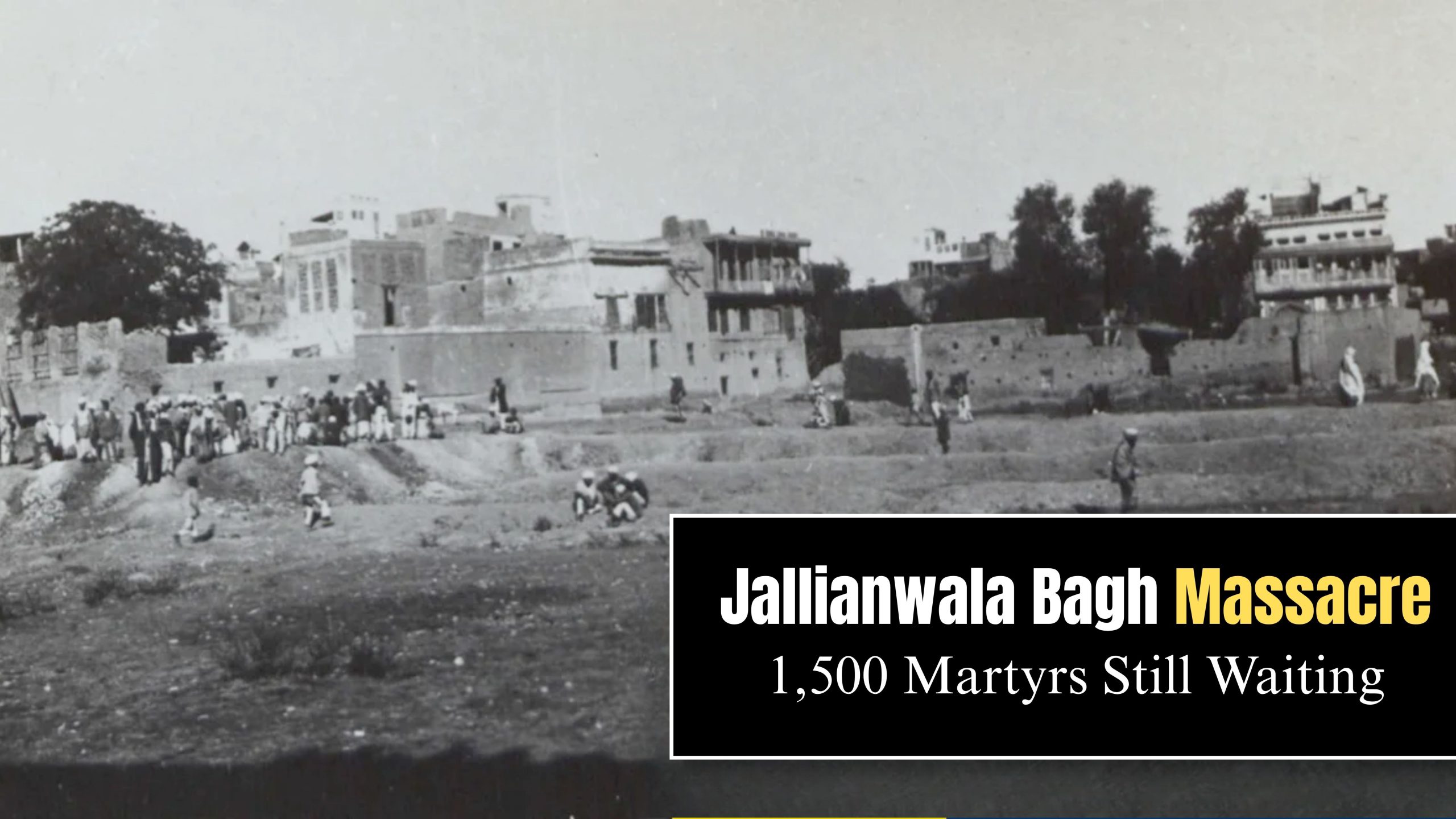
It was a Baisakhi morning. The mustard fields of Punjab glowed gold. Families dressed in their finest clothes. Children ran ahead of their parents. Pilgrims poured out of the Golden Temple into the warm April air.
By evening, that same soil ran crimson.
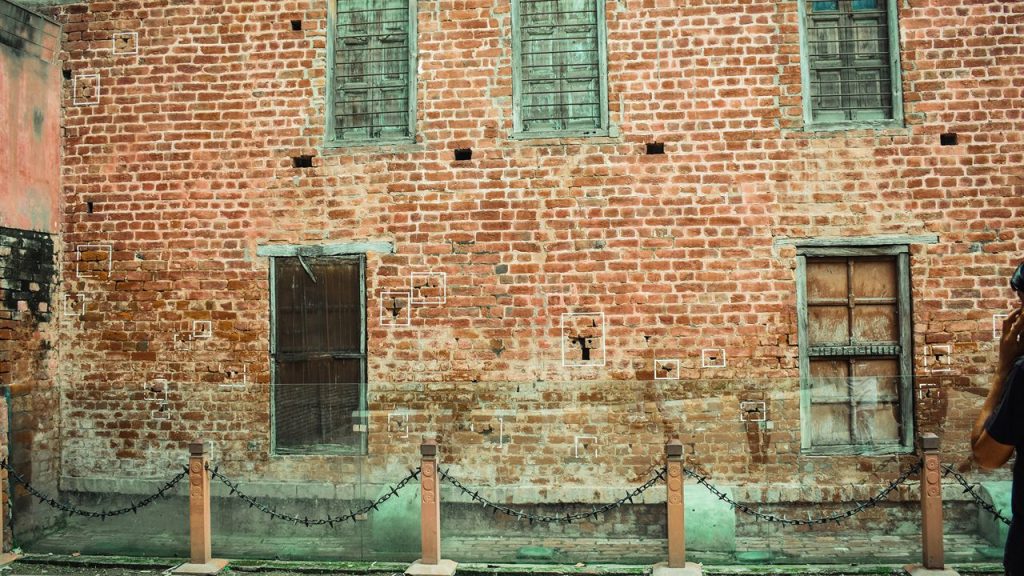
The Jallianwala Bagh massacre happened on April 13, 1919 — and 107 years later, the bullet marks are still visible on the garden walls of Amritsar. The martyrs of that day are still waiting for their full recognition. And the nation that owes them its freedom is still asking Britain for a word it refuses to say. One word. Apology.
Jallianwala Bagh Massacre: Meaning and Why It Changed India Forever
Before we go further, it is worth pausing on the word itself.
A massacre means the deliberate, indiscriminate killing of a large number of people — especially those who are defenceless and unarmed. It is not a battle. It is not a skirmish. It is cold-blooded murder carried out with the full authority of power.
What happened at Jallianwala Bagh on April 13, 1919 fits every part of that definition. And then some.
When was the Jallianwala Bagh Massacre
The Jallianwala Bagh massacre took place on April 13, 1919 — the day of Baisakhi, the harvest festival celebrated across Punjab by Hindus, Muslims, and Sikhs alike.
A large crowd had gathered at the Jallianwala Bagh in Amritsar — some to protest the Rowlatt Act and the arrest of nationalist leaders Saifuddin Kitchlew and Satyapal, others simply to celebrate the festival, unaware of any ban on gatherings. CBS News
The Rowlatt Act was a deeply despised law that allowed the British government to arrest and imprison Indians without trial, without jury, and without evidence. Its passage had already set Punjab on fire with peaceful protests.
At around 5:30 PM, Brigadier-General Reginald Dyer arrived at Jallianwala Bagh with his troops. He gave no warning. He blocked the only narrow entrance — the sole exit from the garden — and ordered his men to open fire directly into the crowd. Newsweek
The firing lasted 10 unbroken minutes. 1,650 rounds were discharged. Dyer deliberately directed his soldiers to aim at the densest parts of the crowd — where the most people stood. Newsweek
People ran in every direction. There was nowhere to go. The walls were high. The gate was blocked. Some jumped into the deep well at the garden’s centre to escape the bullets. 120 bodies were recovered from that well alone after the firing stopped. Newsweek
When the smoke cleared, Baisakhi had become Black Sunday.
Jallianwala Bagh Massacre Death Toll: How Many People Were Killed
The official British inquiry — the Hunter Commission — recorded 381 deaths. The Indian National Congress estimated over 1,000 killed. Other sources place the number even higher.
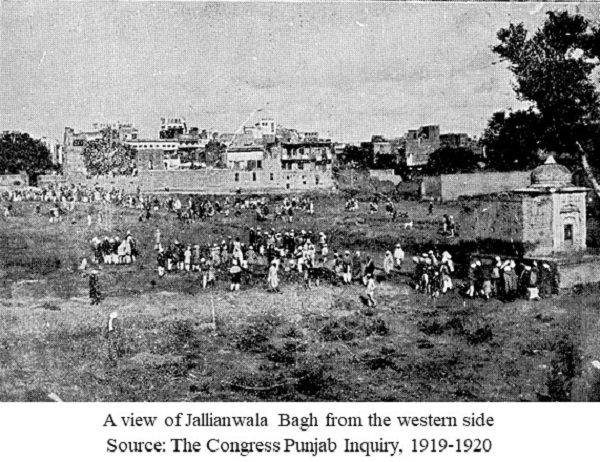
Whatever the precise death toll — which can never now be established with certainty — thousands more were wounded. Dyer imposed a strict curfew immediately after the firing, deliberately preventing medical assistance from reaching the injured for hours. M9.news
Men, women, children, elderly pilgrims. A 6-month-old baby. People who had no idea a ban on public gatherings had even been announced.
This was not a military action. This was a lesson. Dyer himself testified that his intent was to produce “a moral effect” — to strike terror into Indians and demonstrate what disobedience to British authority would cost. M9.news
It produced exactly the opposite effect.
Jallianwala Bagh Massacre and Baisakhi: A Festival Marked by Tragedy
Every year on April 13, India observes two things simultaneously — the joyful harvest festival of Baisakhi and the solemn anniversary of the Jallianwala Bagh massacre.
This dual nature of the date carries a profound message. The day that was supposed to celebrate the abundance of life became the day that demanded we remember how brutally that life was taken.
For the Punjabi people — Hindu, Muslim and Sikh alike — Baisakhi can never be purely festive again. The drum beats of celebration are forever accompanied by the echo of 1,650 gunshots that rang out on the same day in 1919.
That echo is not weakness. It is memory. And memory is the only true monument to martyrdom.
Jallianwala Bagh Massacre: Bhagat Singh’s Emotional Connection
Among the millions shaken by the Jallianwala Bagh massacre was a 12-year-old boy from Lyallpur named Bhagat Singh.
When news of the massacre reached him, Bhagat Singh walked to Amritsar, gathered soil soaked with the blood of the martyrs, and kept it with him — a pledge carried in his hands that he would never forget what the British had done to his people. The Sunday Guardian
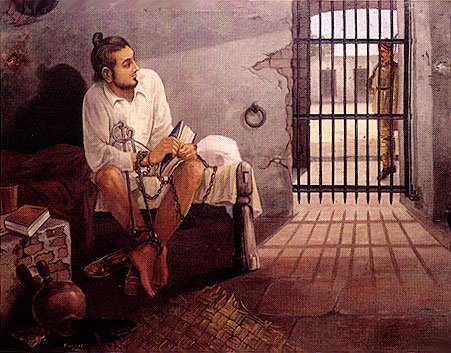
That soil became the fuel of a revolutionary life.
Bhagat Singh grew into the most iconic face of India’s armed resistance against colonialism. He threw a bomb in the Central Legislative Assembly in 1929 — not to kill anyone, but to make the deaf British establishment hear. He was arrested, tried, and hanged on March 23, 1931, at just 23 years of age — alongside his comrades Rajguru and Sukhdev.
Before his execution, Bhagat Singh said: “They may kill me, but they cannot kill my ideas. They can crush my body, but they will not be able to crush my spirit.”
He never forgot Jallianwala Bagh. Neither should we.
Jallianwala Bagh Massacre: Shaheed Udham Singh’s Revenge After 21 Years
If Bhagat Singh carried the spirit of Jallianwala Bagh, Udham Singh carried its vow.
Udham Singh was present at the Jallianwala Bagh that day. He was 20 years old, serving water to those gathered at the meeting when Dyer’s troops began firing. He survived. He watched. And he took a vow that the blood of hundreds would not go unanswered. Argus Media.
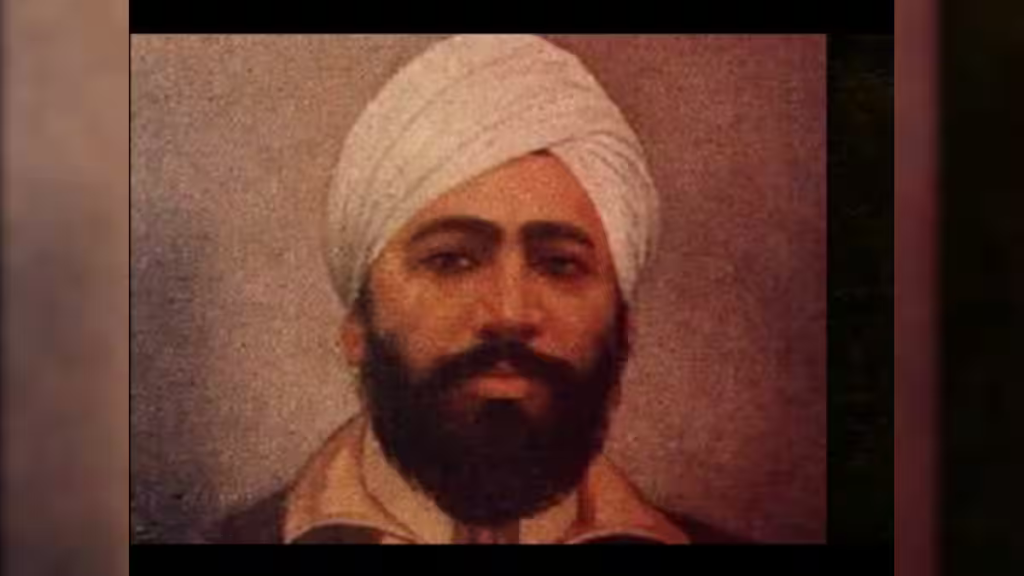
He waited 21 years to keep that promise.
On March 13, 1940, at Caxton Hall in London, Udham Singh shot and killed Michael O’Dwyer — the former Lieutenant Governor of Punjab who had not only sanctioned but praised General Dyer’s action at Jallianwala Bagh. Argus Media
When arrested and asked his name, Udham Singh gave one of the most powerful answers in the history of Indian nationalism. He said his name was Ram Mohammad Singh Azad — combining the names of the three major communities of Punjab — Hindu, Muslim, and Sikh — followed by Azad, meaning freedom. In a single act, he declared that Jallianwala Bagh belonged to all of India, not any one religion. Wikipedia
At his trial, Udham Singh declared: “I am not afraid to die. I am proud to die to free my native land, and I hope that when I am gone, my work will go on.” Asharq Al-Awsat
He was hanged on July 31, 1940. Today, a portrait of Udham Singh hangs in the Jallianwala Bagh memorial. One of seven urns containing his ashes rests in its museum.
The Martyrs Still Seeking Recognition — What India Has Not Done
India has built a memorial. India observes the anniversary. Prime Ministers pay tribute. But recognition goes far deeper than a tweet or a wreath.
The names of those killed are still not fully recorded. Walk through the Jallianwala Bagh memorial today and you will not find a complete list of the dead. No names are carved on the walls. No individual martyrs are commemorated. Hundreds of families have never received formal acknowledgment that their ancestor was killed there.
The renovation of the Jallianwala Bagh memorial between 2019 and 2021 drew sharp criticism from historians, descendants of martyrs, and political leaders — many argued that the renovation had softened or erased the raw visual impact of the tragedy, replacing authentic historical solemnity with something closer to a tourist attraction. Nation Thailand
That criticism carries a serious point. A massacre site should make you uncomfortable. It should confront you with the reality of what happened there. A polished, well-lit garden with modern pathways risks turning grief into scenery.
Britain’s Half-Answer — Deep Regret Is Not an Apology
Over a century later, Britain has come close to an apology — but never actually given one.
In 2013, Prime Minister David Cameron visited Amritsar and called the massacre “a deeply shameful event” — but offered no formal apology. In 2019, PM Theresa May called it “a shameful scar on British-Indian history” and expressed “deep regret” — but again stopped short of the word apology. Bangkok Post
A Conservative MP, Bob Blackman, urged the UK government in Parliament to formally apologise to India. He described how Dyer marched his troops into the enclosed garden and ordered firing until ammunition ran out — and said at least 1,500 people were killed. NBC News
The British government’s position appears to be that an apology could open the door to reparation claims and legal liability — a calculation that places financial caution above moral obligation.
The demand for an apology has been raised by Indian diaspora organisations, UK-based campaigners, Members of Parliament in both countries, and Indian state governments. The demand has two components — a formal apology from Britain’s serving Prime Minister, and the inclusion of colonial history in Britain’s school curriculum so that future generations understand what was done in the name of empire. Asharq Al-Awsat
What India’s Government Must Do — A Clear Agenda
India’s responsibility toward the martyrs of Jallianwala Bagh extends beyond annual tributes. Here is what the Indian government must actively pursue:
Compile and publish a complete list of martyrs. Cross-referencing hospital records, census data, newspaper archives, and family testimonies to create the most comprehensive list possible — then inscribe those names permanently at the memorial.
Pass a parliamentary resolution demanding a formal British apology. Not a diplomatic suggestion — a formal resolution of the Indian Parliament, passed by both Houses, making the demand official and on the record. This was proposed during the 2019 centenary but was not passed.
Establish a Jallianwala Bagh Martyrs’ Compensation Fund. Even symbolic recognition for the families of verified martyrs — education scholarships, pension support, or formal state honours — would demonstrate that the republic values what was sacrificed to create it.
Protect the site’s emotional authenticity. Any further renovation of the Jallianwala Bagh memorial must be guided by historians, descendants of victims, and cultural heritage experts — not by aesthetics or tourism targets.
Make April 13 a mandatory day of teaching in all Indian schools. Not just a holiday or a social media post, but a structured lesson in every classroom — what the Rowlatt Act was, who died at Jallianwala Bagh, what Bhagat Singh and Udham Singh did, and why none of it should ever be forgotten.
Jallianwala Bagh Massacre: Why It Still Matters After 107 Years
India has changed enormously since 1919. The British Empire is history. The generation that lived through colonialism is gone.
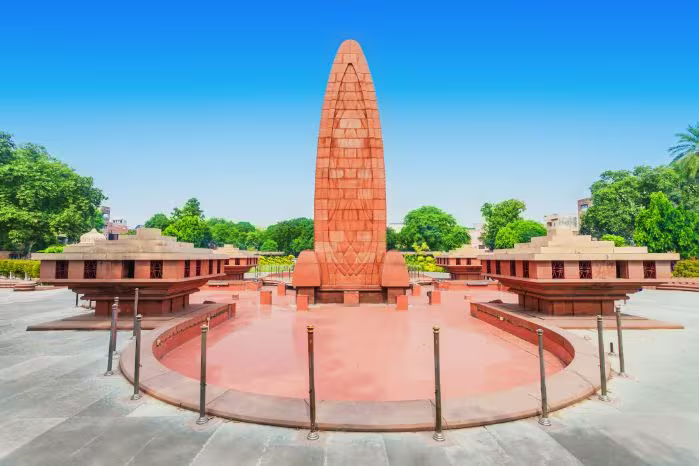
But the debt to the martyrs of Jallianwala Bagh is not a historical debt. It is a living one — owed by every Indian who enjoys freedom today to the men, women, and children who gathered on Baisakhi morning 107 years ago and were shot down for daring to resist.
The bullet marks on those walls are not decoration. They are testimony. They say — we were here, we protested peacefully, and they killed us for it.
The only response worthy of that testimony is to remember with full honesty, demand justice with full force, and teach the truth with full courage.
Jai Hind. Inquilab Zindabad.
Quick Reference — Jallianwala Bagh Massacre
| Detail | Information |
|---|---|
| Date of massacre | April 13, 1919 — Baisakhi Day |
| Location | Jallianwala Bagh, Amritsar, Punjab |
| Ordered by | Brigadier-General Reginald Dyer |
| Sanctioned by | Lt. Governor Michael O’Dwyer |
| Trigger | Protest against Rowlatt Act + Baisakhi gathering |
| Duration of firing | 10 continuous minutes |
| Rounds fired | 1,650 rounds |
| Official death toll | 381 (Hunter Commission) |
| Estimated actual toll | Over 1,000 (Congress inquiry) |
| Bodies from well alone | 120 |
| Bhagat Singh’s age in 1919 | 12 years old |
| Udham Singh’s action | Shot O’Dwyer in London — March 13, 1940 |
| British response to date | “Deep regret” — no formal apology |
| Memorial established | 1923 — Jallianwala Bagh Trust |
| Anniversary observed | April 13 every year |
FAQ — People Also Ask
Q1. When was the Jallianwala Bagh massacre and where did it take place? The Jallianwala Bagh massacre took place on April 13, 1919 — the day of the Baisakhi festival — in the Jallianwala Bagh garden in Amritsar, Punjab, British India. The site is located close to the Golden Temple complex.
Q2. What is the massacre meaning and why is Jallianwala Bagh called a massacre? A massacre refers to the indiscriminate and deliberate killing of a large number of defenceless people. Jallianwala Bagh is called a massacre because British forces, under General Dyer, opened fire without warning on a peaceful, unarmed crowd — men, women, children, and pilgrims — until ammunition ran out. No warning was given and no exit was left unblocked.
Q3. What was Bhagat Singh’s connection to the Jallianwala Bagh massacre? Bhagat Singh was just 12 years old when the massacre happened. He walked to Amritsar after hearing the news, collected soil soaked in the blood of the martyrs, and kept it as a lifelong reminder of British brutality. The massacre deeply radicalised him and set him on the path that led to his becoming India’s most celebrated revolutionary.
Q4. Who was Udham Singh and what did he do to avenge Jallianwala Bagh? Udham Singh was present at Jallianwala Bagh on April 13, 1919, and survived the massacre. He took a vow to avenge the deaths. Twenty-one years later, on March 13, 1940, he shot and killed Michael O’Dwyer — the Lieutenant Governor of Punjab who had sanctioned Dyer’s action — in London. He was hanged on July 31, 1940, and is remembered as Shaheed Udham Singh.
Q5. Has Britain ever apologised for the Jallianwala Bagh massacre? No. Britain has never issued a formal apology. In 2013, PM David Cameron called it “deeply shameful.” In 2019, PM Theresa May expressed “deep regret” but stopped short of an apology. India and its diaspora communities continue to demand a full, formal apology. A British MP raised the demand in Parliament as recently as 2025.
Q6. What should India do to honour the martyrs of Jallianwala Bagh? India should compile and publish a complete list of victims’ names, pass a parliamentary resolution formally demanding a British apology, establish recognition for martyrs’ families, protect the memorial site’s historical authenticity, and make April 13 a mandatory day of teaching in all Indian schools.
Also Read : https://behindevidence.com/india-russia-news-big-energy-shifts-behind-lng-deal-qatar-visit-and-uae-strategy/
Sources
| # | Source | Link |
|---|---|---|
| 1 | Wikipedia — Jallianwala Bagh Massacre | en.wikipedia.org |
| 2 | Festivals of India — Jallianwala Day | festivalsofindia.in |
| 3 | Wikipedia — Jallianwala Bagh Memorial | en.wikipedia.org |
| 4 | Britannica — Jallianwala Bagh Massacre | britannica.com |
| 5 | ETV Bharat — Massacre Anniversary | etvbharat.com |
| 6 | Restless Beings — 100 Years No Apology | restlessbeings.org |
| 7 | Britannica — Udham Singh Biography | britannica.com |
| 8 | UCLA MANAS — Udham Singh Avenger | southasia.ucla.edu |
| 9 | The Tribune — British MP Demands Apology | tribuneindia.com |
| 10 | Peoples Democracy — India Awaits Apology | peoplesdemocracy.in |