

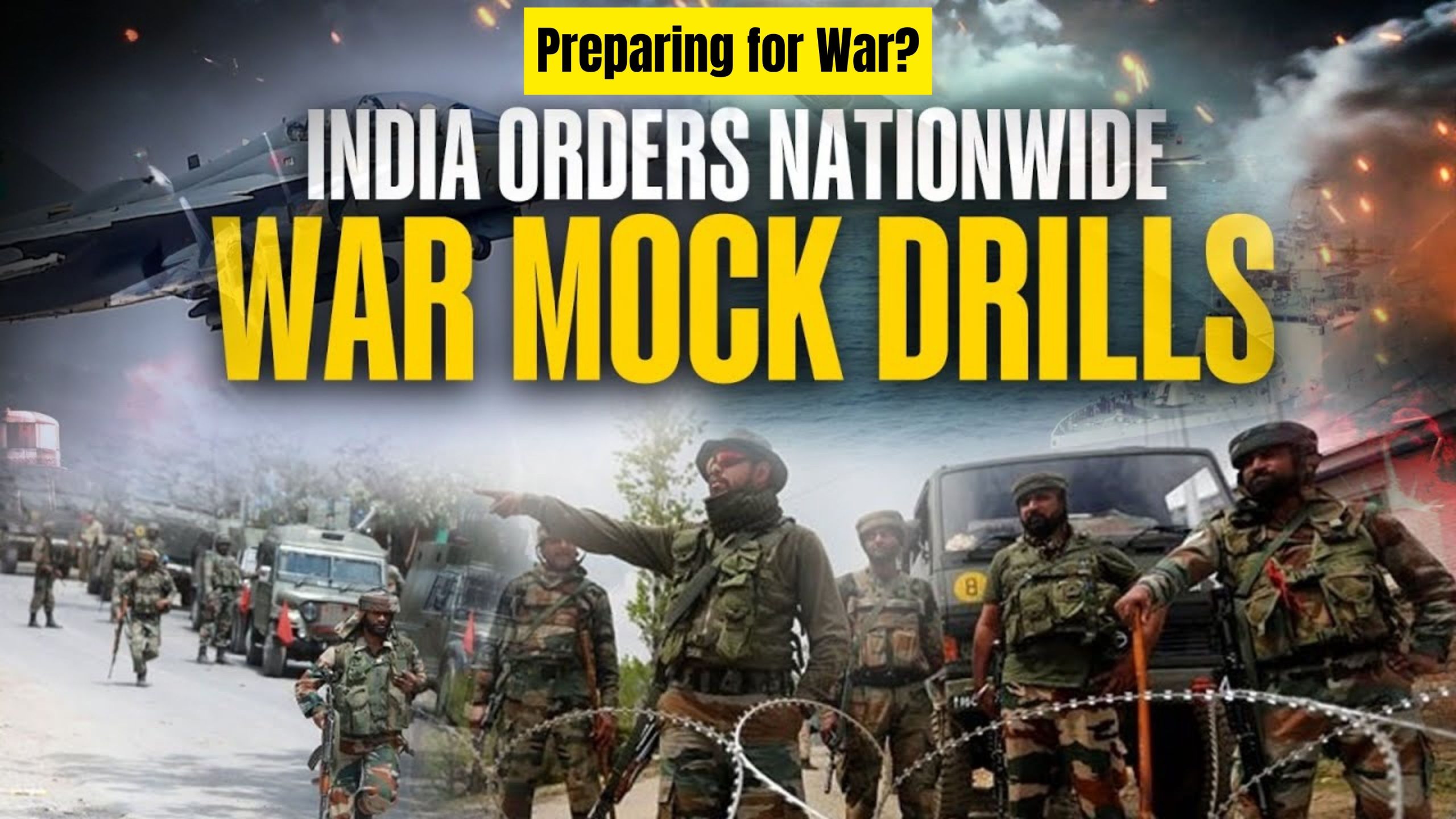
India Pakistan tensions 2026 have entered a critical phase as India’s war room activates and multiple military signals emerge within a short span. The India Pakistan tensions 2026 situation reflects rapid escalation across multiple fronts.
New Delhi is not sleeping. Inside India’s highest security corridors, something big is moving — and the signals point in one clear direction.
India-Pakistan tensions in 2026 have reached a new boiling point. Emergency meetings, military chiefs at sacred shrines, sealed western airspace, and activated border sirens — all happening within the same 24-hour window. This is not routine. This is a nation preparing.
India Pakistan Tensions 2026: War Room Activated
Experts believe India Pakistan tensions 2026 may lead to strategic escalation. India Pakistan tensions 2026 have triggered high-level security meetings. PM Narendra Modi has formed a high-power security committee. It includes only four people — himself, Home Minister Amit Shah, Defence Minister Rajnath Singh, and Finance Minister Nirmala Sitharaman.
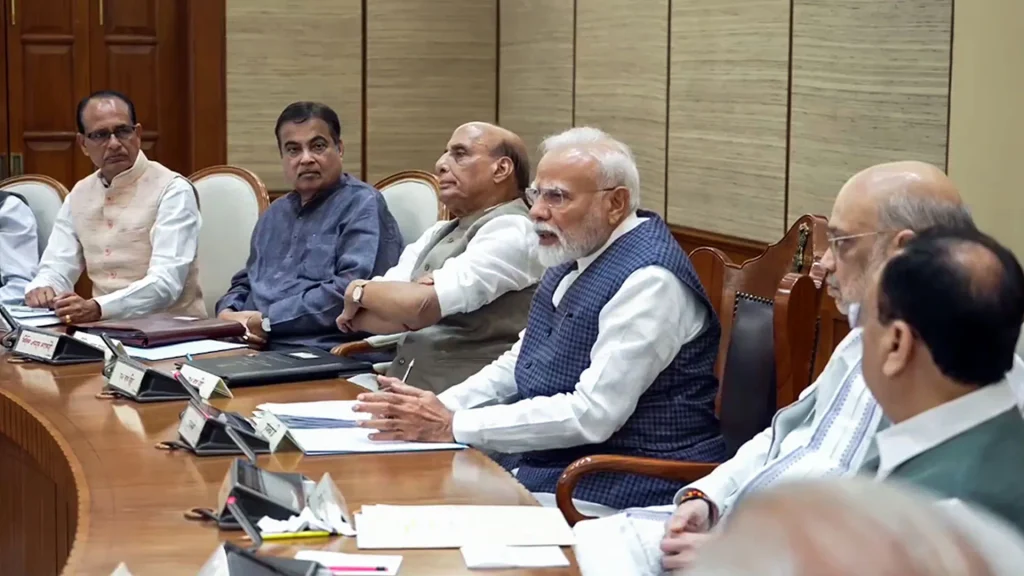
Think about who is sitting in that room. The Defence Minister and Home Minister are not called in for economic decisions. Their presence signals one thing — national security.
NSA Ajit Doval met PM Modi twice within 48 hours. The sessions covered security assessments and strategic response options amid rising tensions with Pakistan. Nation Thailand
Defence Minister Rajnath Singh and Chief of Defence Staff General Anil Chauhan also held direct briefings with the PM Modi, alongside the chiefs of all three armed forces. Wikipedia
India’s top brass does not gather like this for anything routine. Every meeting carried a specific security brief. Every decision feeds into a larger plan.However, analysts warn that escalation carries significant risks.
Why Are India’s Military Chiefs Visiting Temples?
Three military chiefs. Three sacred sites. One narrow timeframe.
The Army Chief visited Jagannath Temple in Odisha. The Air Force Chief went to the Golden Temple in Amritsar. The Naval Chief prayed at Mahakal Temple in Ujjain.
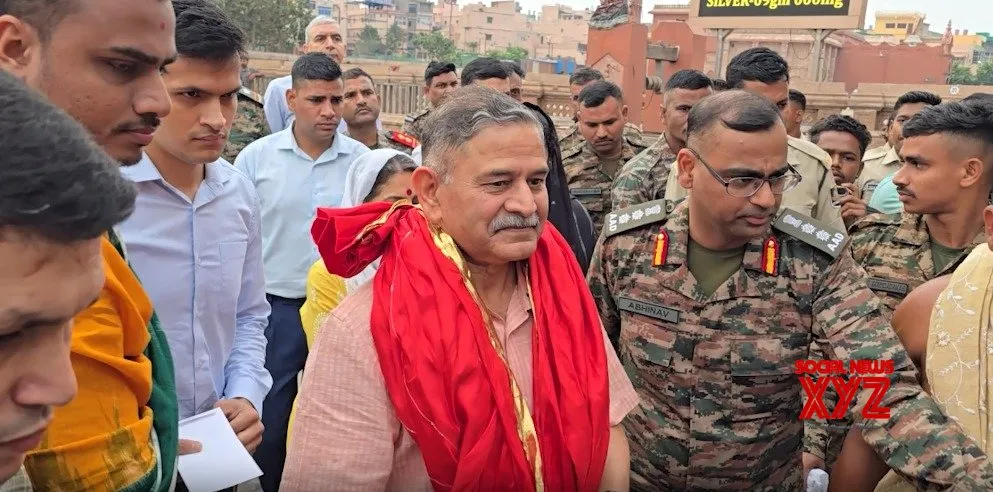

Each visit included prayers for the safety of Indian soldiers and their families. This pattern is not accidental.
India’s military has a long tradition of seeking divine blessings before major operations. Senior commanders visit these sites not as tourists but as leaders who understand the weight of what lies ahead.
These three simultaneous visits send a clear message — something is coming, and the military knows it.
India Pakistan Tensions 2026: NOTAM and Border Activity
On the ground, the picture becomes even sharper.
India issued a sweeping NOTAM — a Notice to Airmen. It covers airspace over Punjab, Rajasthan, and Gujarat. Every single one of these states shares a direct land border with Pakistan.
A NOTAM for a large-scale tri-services exercise was issued along India’s western border. Analysts noted that the scale and chosen area were unusual compared to standard military drills. Asharq Al-Awsat
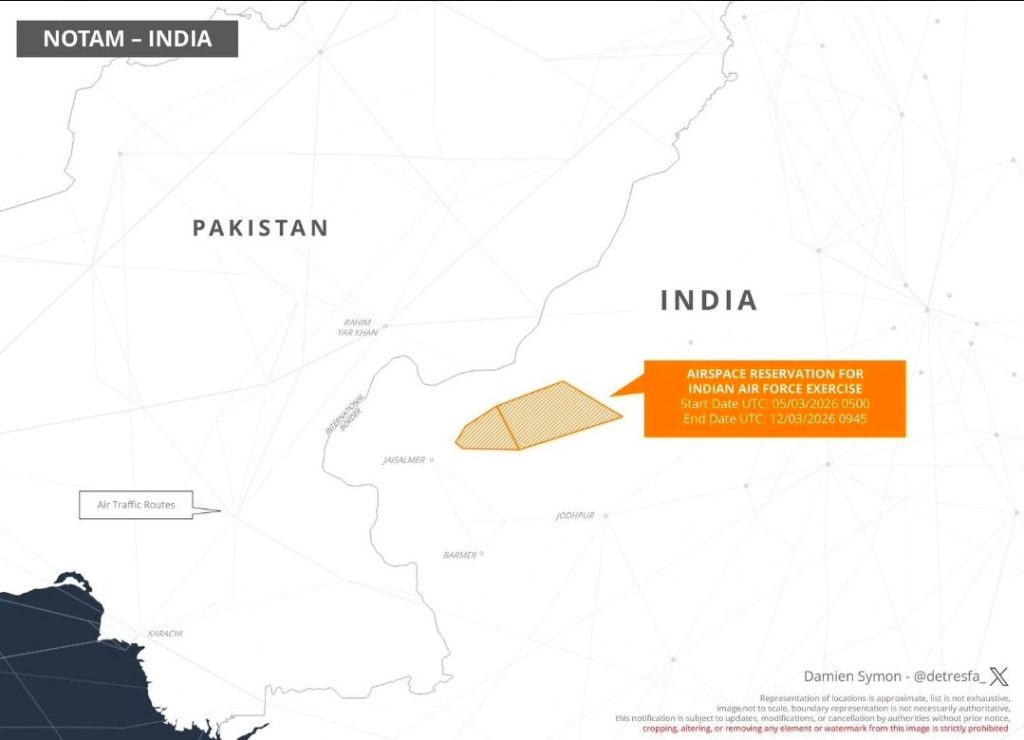
This is not a single-state exercise. This covers the entire western theatre simultaneously.
Emergency sirens were also tested at 11 locations across Jaisalmer. This desert district sits directly across Pakistan’s Sindh province. During the May 2025 Operation Sindoor conflict, blackouts and sirens activated across Barmer and Jaisalmer as precautionary civil defence measures. Argus Media
Testing those same systems now is a deliberate recall of institutional war memory.As a result, border preparedness has entered a heightened state.
The Context — Operation Sindoor and the Pahalgam Attack
To understand 2026, you must first understand 2025.
On April 22, 2025, gunmen killed 26 people at a tourist site near Pahalgam in Indian-administered Kashmir. The attackers reportedly targeted Hindu tourists. India blamed Pakistan’s deep state for orchestrating the attack. Bangkok Post
India’s response arrived in May 2025 — Operation Sindoor. Indian forces struck nine terror camps inside Pakistan and Pakistan-occupied Kashmir.
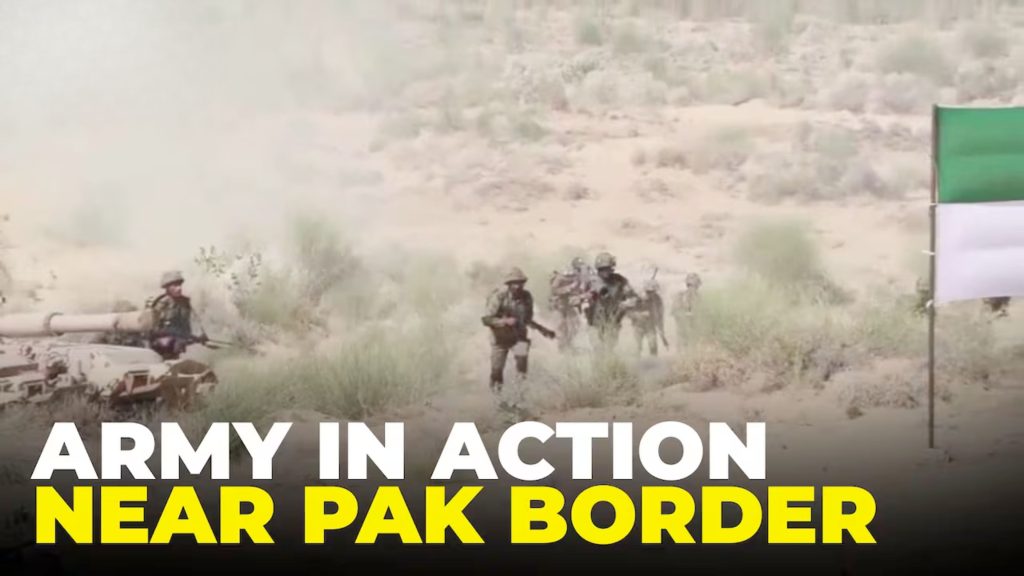
PM Modi described Operation Sindoor as setting “a new benchmark in India’s fight against terrorism” — establishing a doctrine of military response to state-sponsored attacks, rejection of nuclear blackmail, and refusal to separate terror groups from their state sponsors. M9.news
A ceasefire was brokered on May 10, 2025, after Pakistan requested a halt to hostilities. PM Modi later clarified in Parliament that no world leader pressured India to stop. India stopped only after it achieved its military and political objectives. Newsweek
Critically — Operation Sindoor was never formally suspended. That phrase still echoes through India’s defence establishment.
The Classified Risk File on Modi’s Desk
Reports indicate that NSA Ajit Doval placed a classified document before PM Modi. The file covers a risk assessment for a potential second phase of Operation Sindoor.
It evaluates three things — what India gains from acting, what risks it absorbs, and what the regional consequences look like. The 3-hour closed-door briefing that followed confirmed the document’s weight.
India also approved a fresh ₹2,400 crore defence acquisition. The package includes the Ghatak unmanned strike aircraft and components of the S-400 missile defence system.
These are not defensive purchases made during peacetime. They fill specific gaps in an active operational matrix.
Pakistan’s Escalation — Desperation Driving Aggression
Pakistan’s behaviour follows a predictable pattern. Its economy collapses, and its military turns attention toward India.
Pakistan’s economy has been in near-complete collapse, with its government repeatedly seeking IMF bailouts and financial support from multiple countries while managing mounting domestic unrest. Asharq Al-Awsat
Former Pakistani diplomat Abdul Basit publicly threatened Mumbai and Delhi with nuclear strikes. Pakistan Army Chief Asim Munir made similar statements.
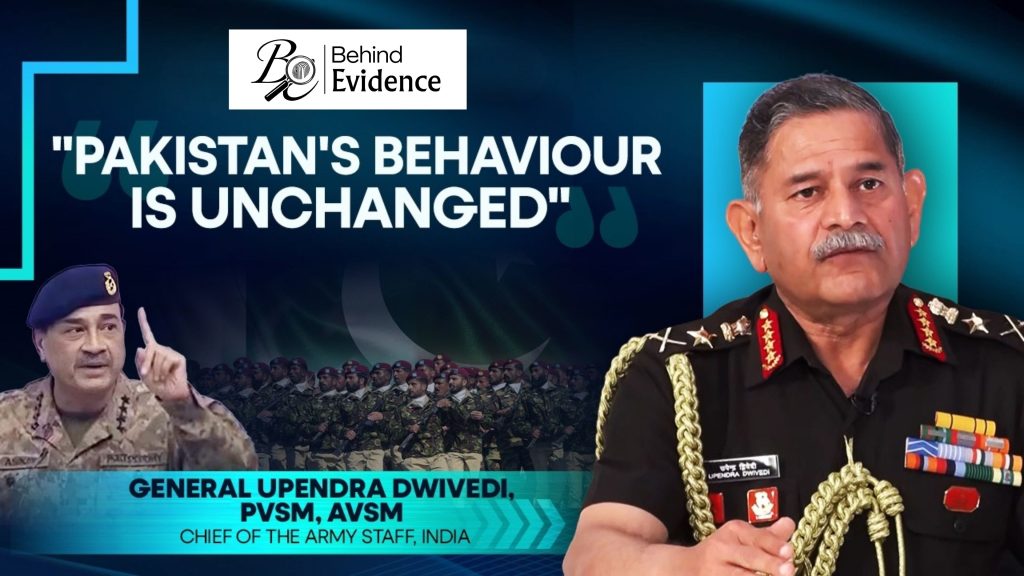
Observers note that nuclear rhetoric from Pakistan is a leading indicator of escalation. Pakistan uses nuclear signalling as a deterrence tool whenever it faces internal or external pressure. Bangkok Post
India’s current leadership has consistently called this bluff. After Operation Sindoor proved India would strike even under nuclear rhetoric, Pakistan’s threats carry less deterrence value than before. Therefore, India appears more confident in its response strategy.
The US Factor — Strategic Partner, Not Unconditional Ally
A report in The Sunday Guardian created significant strategic noise. It stated that Washington told New Delhi directly — America will not offer India unconditional support in any India-Pakistan conflict.
US officials conveyed that their decisions will follow American national interest, not Indian national interest, despite India occupying a central role in America’s Indo-Pacific policy. Nation Thailand
This is not new history. In 2019, Pakistan deployed American-supplied F-16 jets against India — a direct violation of the terms under which those aircraft were supplied. The US did not punish Pakistan.
India drew lessons from that episode. NSA Doval’s current engagements include establishing military-grade encrypted communication lines with Washington — outside standard diplomatic channels.
India also diversified its crude oil supply chain. It began sourcing from Argentina, Nigeria, and Brazil — a hedge against energy disruption if a standoff with Pakistan overlaps with a Middle East crisis.
PM Modi’s Public Warning — The Language of a War Leader
PM Modi addressed the nation recently. His tone was unmistakable.
He called for all citizens to stand united during difficult times. Modi asked political parties to stop actions that benefit India’s adversaries. He warned that sacrifices would be needed.
CSIS analysis noted that PM Modi’s statements after Operation Sindoor established three clear pillars — a fitting military reply to any terror attack, rejection of nuclear blackmail, and no distinction between terrorists and their state sponsors. M9.news
Leaders do not speak in this register during normal times. This is the language of a nation moving from preparedness into action.
Northern Command’s Doctrine Shift
India’s Northern Command issued a significant public statement. Its head said modern warfare no longer follows old rules.
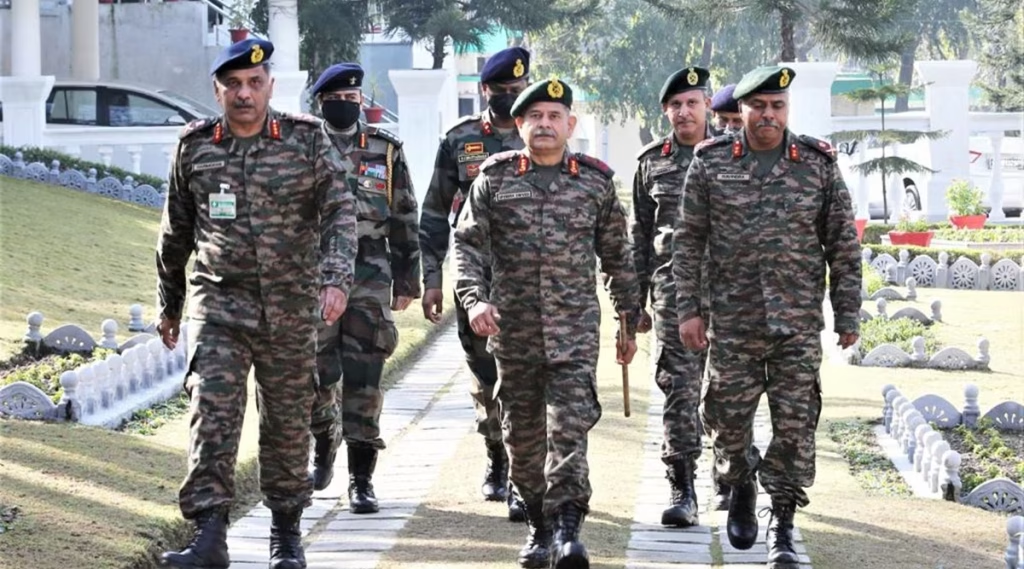
Proxy forces, drone swarms, and hybrid tactics now blur the line between military and civilian conflict. Traditional armies fight traditional armies less often than before.
He called for complete civil-military integration — India’s civilian society and armed forces working as one system. That is a doctrine change, stated publicly.
This reflects lessons absorbed directly from the Ukraine, Gaza, and Iran theatres of 2025–2026. Modern wars do not stay inside military lanes.
What the Markets Are Telling Us
Stock markets price in risk faster than any analyst. The Sensex dropped 1,836 points in a single session. Foreign investors pulled capital rapidly.
Gold reversed a recent correction and surged 10% from its recent bottom. Gold rises when uncertainty rises. Right now, it is rising sharply.
Stock markets in India experienced significant volatility during the 2025 conflict but rebounded sharply after the ceasefire was announced on May 12. CBS News
Markets remember 2025. They are pricing in the possibility that 2026 looks similar — or worse. Additionally, investors are reacting to rising geopolitical uncertainty.
India’s New Pakistan Strategy — Beyond Rivalry
A February 2026 analysis in The Diplomat made a striking observation. India, it argued, has moved past rivalry with Pakistan into something different — strategic indifference.
India has concluded that Pakistan no longer merits sustained strategic engagement. What replaced rivalry is a deliberate choice to deter, punish, and disengage — rather than negotiate. Asharq Al-Awsat
This shift changes everything. India is no longer trying to manage Pakistan. India is now simply deterring it — and striking when deterrence fails.
Operation Sindoor established that new normal. The current mobilisation suggests India is preparing to enforce it again.India Pakistan tensions 2026 could shape regional stability in the coming months.
India Pakistan Tensions 2026: What Happens Next
Scenario 1 — Diplomatic Cooling Both sides step back quietly. Back-channel talks reduce temperatures. A second US-mediated de-escalation emerges. Possible — but it requires restraint Pakistan has rarely shown.
Scenario 2 — Precise, Limited Strike India conducts a targeted operation against identified terror infrastructure. Similar to the May 2025 strikes in scope. Sends a message without triggering full escalation.
Scenario 3 — Full Strategic Escalation A major provocation triggers a comprehensive Indian response — air, land, and naval forces moving simultaneously. The most serious outcome.
Scenario 4 — Sustained High-Alert Standoff Both sides maintain maximum readiness without active conflict. Tension itself serves as a coercive instrument while back-channels work quietly.
India’s current posture fits Scenarios 2 and 3 most closely. The hardware, the NOTAM, the war room, and the classified briefings all point to a country that has moved beyond planning into active preparation. Meanwhile, global powers continue to monitor the situation closely.
Quick Reference — India’s National Security Signals
| Signal | Detail |
|---|---|
| War Room Formed | PM Modi + Home, Defence, Finance Ministers |
| NSA Briefing | Ajit Doval — 3-hour classified session with PM |
| Military Chiefs | Jagannath Temple, Golden Temple, Mahakal Temple |
| NOTAM Issued | Punjab, Rajasthan, Gujarat — entire western border |
| Jaisalmer Sirens | Tested across 11 border locations |
| Defence Spend | ₹2,400 crore — Ghatak drone + S-400 systems |
| Operation Sindoor | Struck 9 terror camps in May 2025 — not suspended |
| Ceasefire | May 10, 2025 — Pakistan requested halt |
| US Position | No unconditional support for India vs Pakistan |
| Market Reaction | Sensex fell 1,836 points; Gold surged 10% |
FAQ — People Also Ask
Q1. What is Operation Sindoor and why does it matter in 2026? Operation Sindoor was India’s military strike on 9 terror camps inside Pakistan and Pakistan-occupied Kashmir in May 2025. It followed the Pahalgam attack that killed 26 people. India never formally suspended the operation. In 2026, classified risk assessments for a potential second phase are actively under review by PM Modi and NSA Doval.
Q2. Why are India’s military chiefs visiting temples before a possible conflict? Indian military tradition involves senior commanders seeking blessings from sacred sites before major operations or high-risk deployments. Three chiefs visiting three different sacred locations simultaneously signals institutional preparation for a significant event.
Q3. What does a NOTAM over Punjab, Rajasthan, and Gujarat mean? A NOTAM restricts civilian aircraft from designated airspace zones. Issuing one across all three western border states simultaneously points to large-scale military activity — either pre-positioning of forces, live-fire exercises, or active operational preparation along India’s entire border with Pakistan.
Q4. Will the US support India against Pakistan in 2026? Reports suggest Washington told India it will not provide unconditional support in any India-Pakistan conflict. US decisions follow American national interest. India has responded by building military-grade communication lines with Washington and diversifying its strategic partnerships to reduce dependence on US backing.
Q5. Why does Pakistan keep threatening nuclear strikes against India? Pakistan uses nuclear threats as a deterrence tool — particularly when its economy is weak and domestic unrest rises. After Operation Sindoor demonstrated that India strikes despite nuclear rhetoric, analysts say Pakistan’s nuclear signalling has lost much of its deterrence value in New Delhi’s strategic calculus.
Also Read : https://behindevidence.com/black-rain-in-iran-2026-tehran-toxic-rain/
Sources
| # | Source | Link |
|---|---|---|
| 1 | Wikipedia — 2025 India-Pakistan Conflict | en.wikipedia.org |
| 2 | Wikipedia — 2025 India-Pakistan Crisis | en.wikipedia.org |
| 3 | The Hans India — NSA Doval Meets PM Modi | thehansindia.com |
| 4 | Library of Congress — India-Pakistan 2025 | congress.gov |
| 5 | CSIS — What Led to the Crisis | csis.org |
| 6 | The Diplomat — India’s New Pakistan Strategy | thediplomat.com |
| 7 | TIME — India Pakistan Ceasefire | time.com |
| 8 | The Tribune — PM Modi Security Review | tribuneindia.com |
| 9 | Al Jazeera — India Pakistan Tensions Tag | aljazeera.com |
| 10 | BusinessToday — PM Modi Defence Meetings | businesstoday.in |
📌 Editorial Note: This article presents verified, publicly reported facts and neutral strategic analysis. It does not advocate for military conflict or any political position. All unverified claims from source material were excluded during writing. Readers should follow official government channels for confirmed policy statements.